
Minimalism is all about avoiding the unnecessary. By participating in minimalism we can also participate in the universal destination of goods. Read more to see what both of these have to do with the 7th Commandment.
The 7th commandment is “You shall not steal”. On the surface this seems like one of the easiest commandments to follow. From a young age we learn not to take what belongs to someone else. It is easy to understand the 7th commandment when we envision not stealing from someone’s house or a store. The Catechism of the Catholic Church affirms this interpretation of the law, but then takes it further.
The seventh commandment forbids unjustly taking or keeping the goods of one’s neighbor and wronging him in any way with respect to his goods. It commands justice and charity in the care of earthly goods and the fruits of men’s labor. For the sake of the common good, it requires respect for the universal destination of goods and respect for the right to private property. Christian life strives to order this world’s goods to God and to fraternal charity.
CCC 2401
Unjustly Taking or Keeping
As the Catechism says: “The 7th commandment forbids unjustly taking or keeping the goods of one’s neighbor”. Catechism classes everywhere teach this definition. It is simple to understand and relatively easy to follow.
It is naturally is upsetting to a child when something is taken from them; when theft occurs. Theft is always upsetting and thus a natural opening to teaching the child about the 7th commandment. The child’s natural reaction to theft teaches them how to follow it. If the child do not want to make other children feel upset like how they are feeling, then they should follow the 7th commandment.
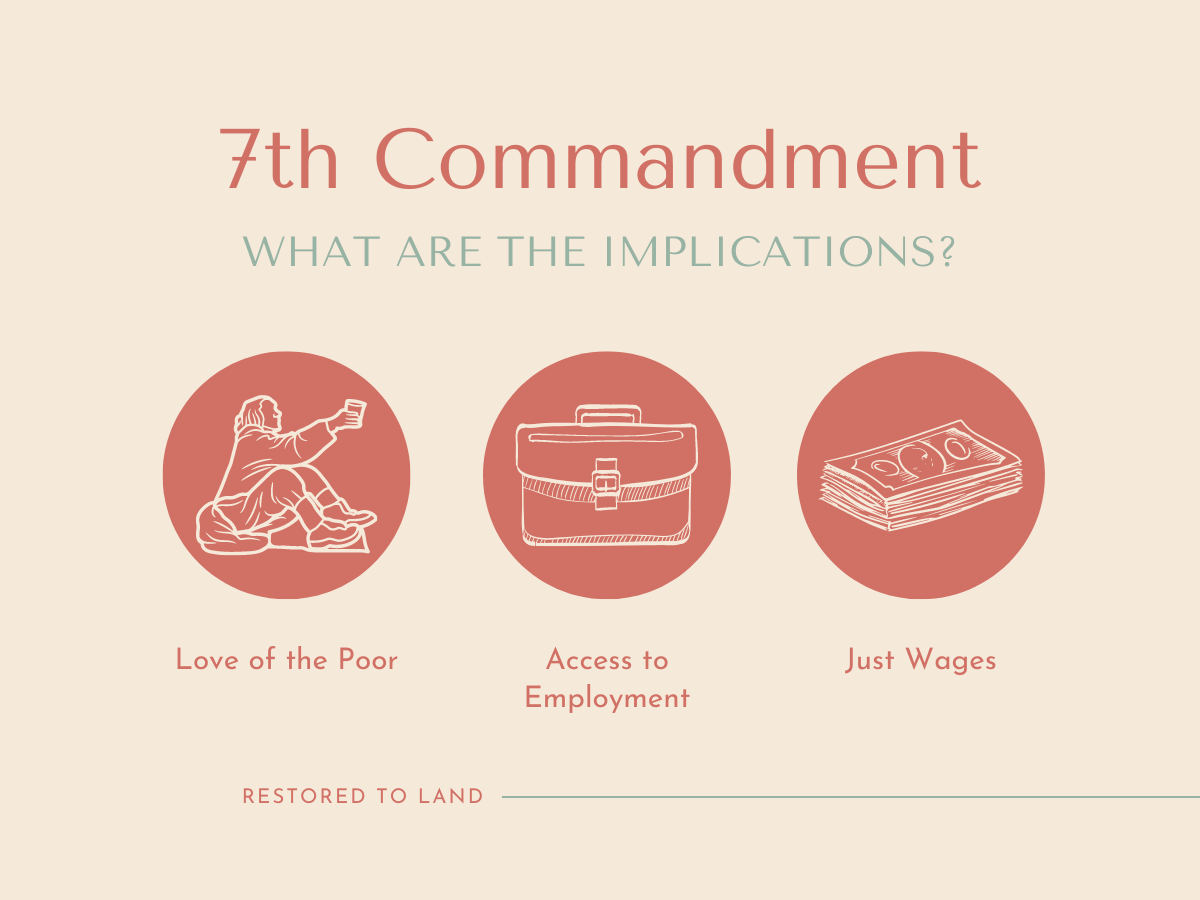
This child-like understanding of the 7th commandment is often where our interpretation ends. It is only when we look closer at the commandment with a mature mind that we begin to unpack it’s deeper implications. The 7th commandment encompasses such things as access to employment, just wages, justice and solidarity among nations, and love for the poor.
I am not going to unpack all of these ideas today, but I am going to look into what how the 7th commandment can aid me in my journey to minimalism. First though, we are going to go over the concept of the Universal Destination of Goods.
Universal Destination of Goods
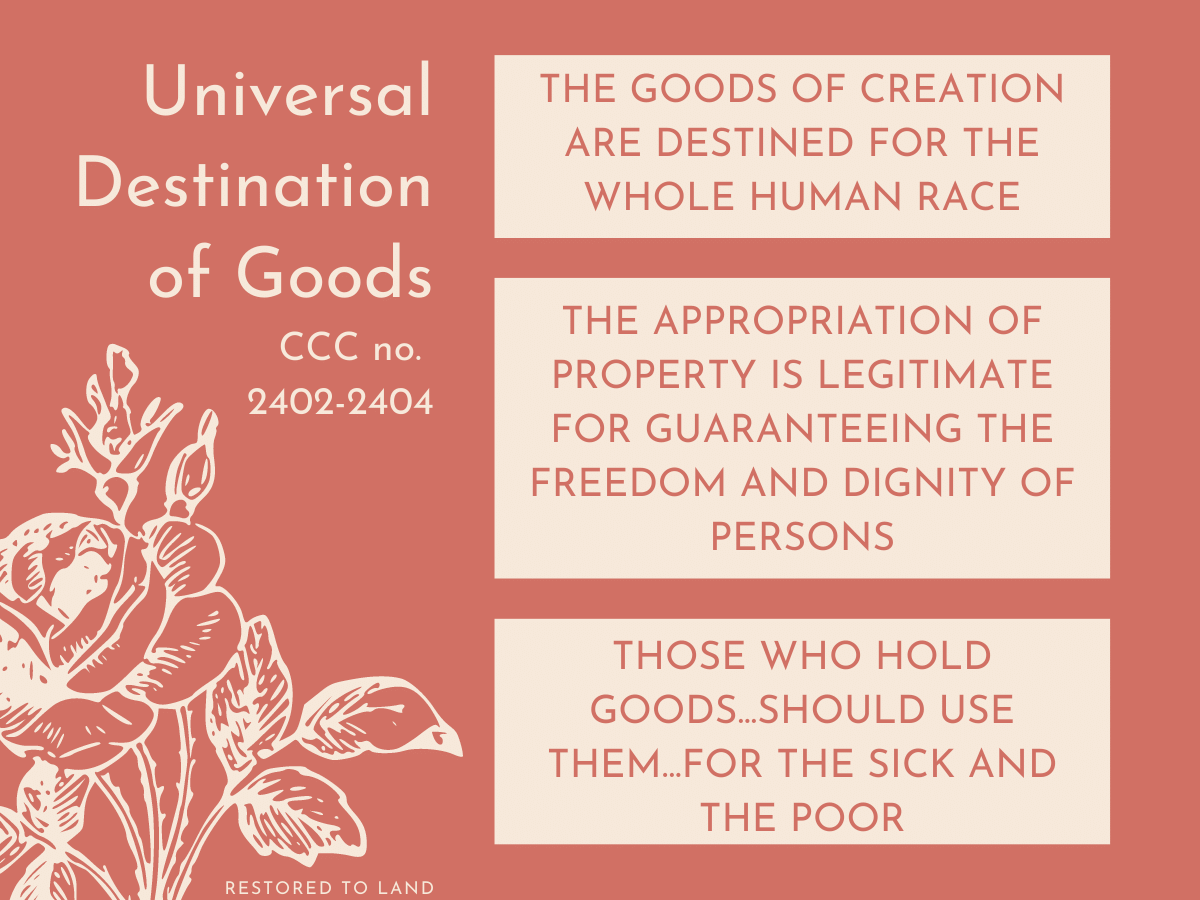
The Universal Destination of Goods is the Catholic social teaching that “the goods of creation are destined for the whole human race” (CCC 2402). This means that the bounty of the earth and the fruits of the labor of man are meant to provide for the individual needs of all people as well as the common good.
Even though the goods of creation are meant for the whole human race, the earth is divided up among men to assure their security and that of their family. The Church recognizes that “the appropriation of property is legitimate for guaranteeing the freedom and dignity of persons and for helping each of them to meet his basic needs and the needs of those in his charge” (CCC 2402).
This recognition of the right to private property contained in the 7th commandment is secondary to the universal destination of goods. This means that only after the fundamental need of all people are met can private property be respected. The ownership of private property makes the owner a steward of that land. As a steward he is tasked with making the land fruitful for the benefit of others, his family coming first (CCC 2404).
The 7th Commandment makes minimalism easy
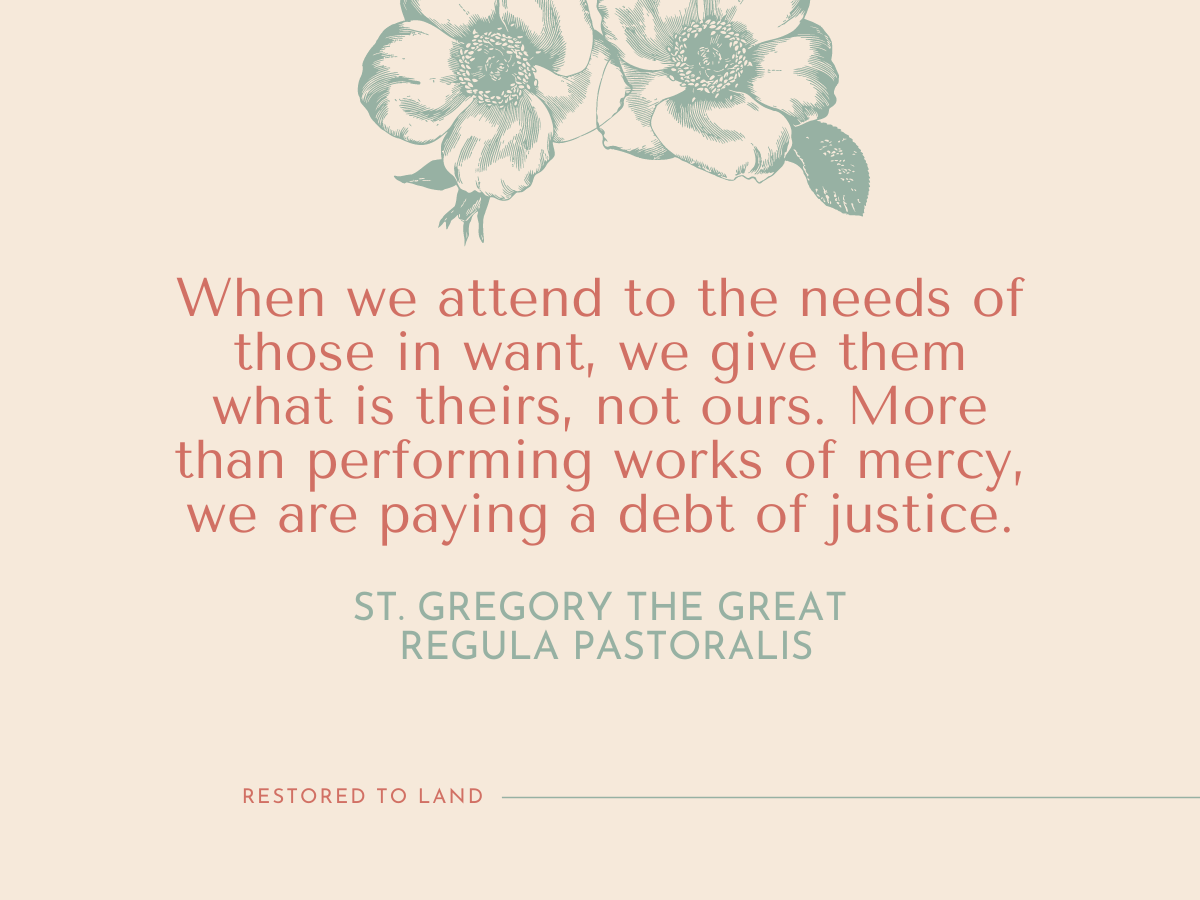
Minimalism is all about avoiding the unnecessary. It is the lifestyle embodiment of the phrase “less is more”. Following the 7th commandment makes minimalism easier. When we truly follow this commandment we are only using what we need. Pope St. Gregory the Great says the following about sharing what we have with the poor: “When we attend to the needs of those in want, we give them what is theirs, not ours. More than performing works of mercy, we are paying a debt of justice.”
By living a minimalist life we can attend to the needs of those in want. We can let go of the belongings in our home that we do not need and return them to their rightful owners: those who have an actual need for them. It can be difficult getting physical goods to the right people. Organizations such as food pantries and the St. Vincent de Paul Society help bridge this gap.
How do you live out the 7th commandment?
I encourage you to pick one area of your house and look at it through the lens of the Universal Destination of Goods. Could any of the things you see in that area benefit someone else more than your family? How will you get these things into the hands of those who have a real need for them?
I would love to hear your answers to these below in the comments. Thanks for coming along on the journey!
Leave a Reply